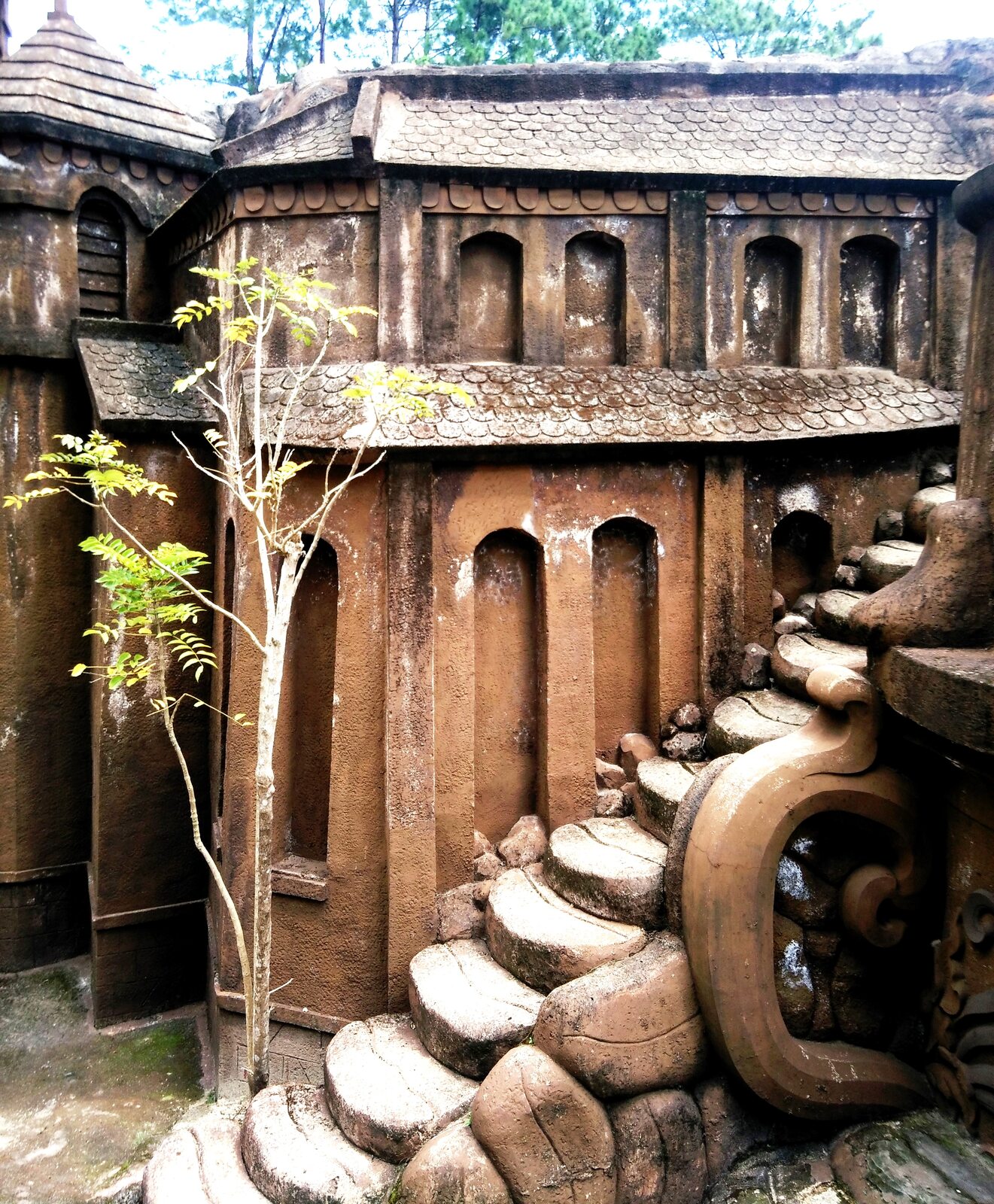
Clay, slopes and rain are a poor combination. A wet visit is still possible, but it needs different shoes, a shorter plan and realistic expectations about photographs.
Route type
Outdoor sculpture path
Main risk
Slippery surfaces and softened clay
Suggested footwear
Grippy shoes, not smooth soles
Visit length in rain
Shorter than a dry-day loop
Why rain matters more here
The attraction is a sculpture landscape rather than a covered museum. The provincial directory describes clay architectural and landscape reproductions; those surfaces are exposed to weather.
Wet clay is softer and more easily marked, which is why touching, climbing and leaning on figures is a bad idea in any weather and worse after rain.
Historic image used for context, not a current-condition photograph. Photo credits.
Footing and shoes
Paths, steps and compacted ground can become slick. Smooth-soled trainers, sandals and flip-flops are the wrong choice on a wet day.
Walk on the surfaced line, use handrails where provided, and skip any section that looks muddy or roped off. No full accessibility audit of this route exists, so judge surfaces yourself.
Grippy soles with tread; avoid leather soles and fashion sandals.
A light rain shell rather than an umbrella if it is windy.
A dry bag or plastic cover for phone and camera.
What rain does to the photographs
Overcast light is actually flattering for clay: it removes the harsh midday shadows that flatten relief work. Wet surfaces also deepen the red-earth colour.
The trade-off is water on the lens, mist on distant figures and fewer dry places to change lenses. Bring a microfibre cloth and shoot from under shelter where possible.
Adjusting the plan
Cut the loop rather than pushing through every section. Keep the visit to the parts with firm footing, then retreat to the lake area or a café if the rain sets in.
In the wet season, watch the radar and go when there is a clear window. Committing to a fixed hour in advance is the main reason people end up walking a slippery route in heavy rain.
Safety basics
Avoid water edges, do not shelter under clay structures, and keep children close on wet steps. Thunderstorms are common in the rainy season; move to a solid building if you hear thunder.
If staff close a section, treat that as final. Do not step over barriers for a photograph.
Before, during and after a shower
Before you go, look at the hourly forecast rather than the daily icon and choose the driest two-hour window you can. Pack a light waterproof layer, a bag for the phone, and footwear with grip; an umbrella helps in light rain but leaves both hands busy on uneven steps. If the forecast shows continuous heavy rain, move the sculpture visit and use the city's indoor stops instead.
During a shower, stop walking and wait under proper shelter rather than sheltering beside a sculpture or on an exposed bank. After the rain, the surfaces may still be slick even in sunshine, and the air can be beautifully clear for photographs. Give the ground time to dry before hurrying along the route.
Check the hourly rain probability, not just the weekly summary.
Keep a dry layer for the ride back; highland evenings cool quickly.
Photograph from a stable stance, never from a wet edge.
Re-check the return transport plan if the rain delays you.
What rain changes about the sculpture area
The route is an outdoor sequence of reliefs, steps and water features, so rain changes the surface underfoot more than the distance. Wet clay tones can look richer and puddles can add reflections, which is why some photographers prefer an overcast day. The trade-off is reduced traction, muddy hems and a higher chance that a small facility or a short section is closed.
Nothing here claims which parts are covered or how quickly the route drains. Those are site-management details that need a current, on-the-ground check; plan as though the whole walk is exposed.
Small kit that changes the whole day
A rainy visit is rarely ruined by the rain itself; it is ruined by wet feet, a fogged phone lens and no dry layer for the ride back. Shoes with real grip, a spare pair of socks, a small cloth for the lens, a bag for electronics and a light waterproof layer are enough. An umbrella is useful in drizzle but awkward on steps and in wind.
Pack for two temperatures. A highland afternoon can be warm before a shower and noticeably cool afterwards, and children feel that change faster than adults. A dry top in a sealed bag is the item people are most glad to have brought.
Grip-first footwear over anything photographed well.
A cloth for the lens, kept dry.
One sealed dry layer per person.
Guidance checked 10 November 2026. Prices, hours and access are attributed references, not live operator information.Provincial directory ↗
This is an independent guide, not the operator or a ticket seller. Confirm current prices, opening, access and photography rules before travelling.
Practical answers
Frequently asked questions
Can you visit Clay Tunnel Da Lat when it rains?
Usually yes, but the route is outdoors. Expect slippery surfaces, shorter usable time and fewer photo options, and check that the site is open before travelling.
What should I wear on a wet day?
Shoes with real tread, a light rain shell and a dry bag for electronics. Avoid smooth soles and open sandals.
Is rain good for photos?
Overcast light suits clay reliefs and wet surfaces look richer, but you will need to protect the lens and shoot from shelter.
Does rain close the attraction?
No published rain closure policy exists. Confirm locally, and follow staff instructions about closed sections.