Where to stand is a different question from how to shoot. This page covers positions and timing; the photography guide covers settings and light.
Signature shot
Water feature and sculpted faces
Quietest time
First hour after opening
Best light
Morning side light, overcast midday
Tripods
Ask before use
The water feature
The reflective pool with sculpted faces is the shot most visitors come for. Stand low and slightly off-axis so the reflection is not broken by your own silhouette.
Expect a queue at the obvious position. A two-metre shift to the side often gives a cleaner frame with nobody behind you.
Historic image used for context, not a current-condition photograph. Photo credits.
Clay streetscapes and archways
Framing a clay building through an arch or between two figures gives depth that a flat frontal shot lacks. Use the route's own structures as a frame rather than adding props.
Watch the edges: barriers, signage and other visitors creep into wide frames. Take one step forward and re-check.
The long path
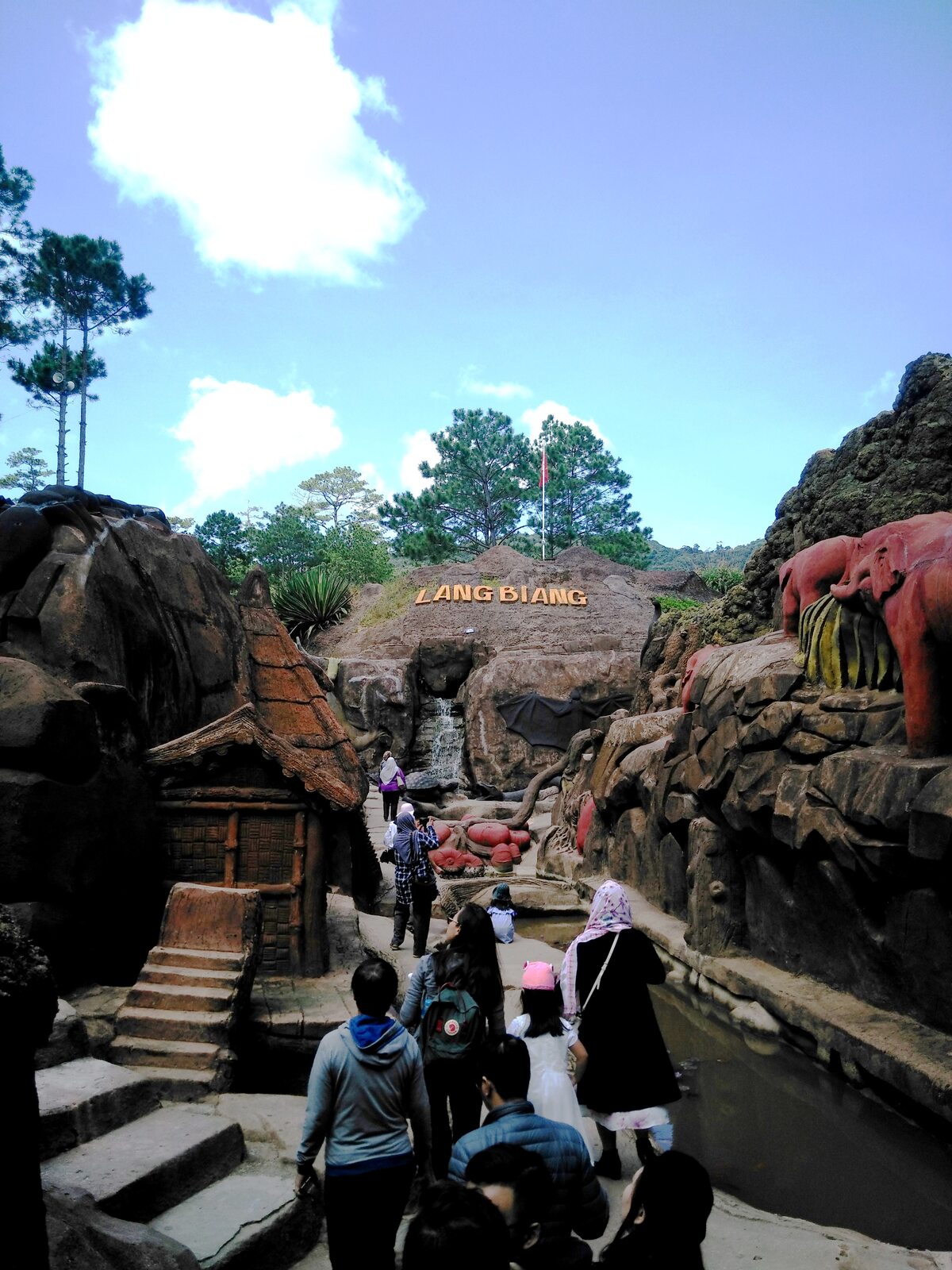
A path receding between sculptures is the reliable 'place' photograph. Shoot from knee height with the path entering from a corner, and wait for a gap in people.
Early morning gives you both the empty path and long shadows; midday gives you heat haze and hard edges.
Portraits
For people pictures, put the sculpture behind and to one side, then expose for the face. Clay is mid-toned and forgiving; the sky is not.
Avoid standing on plinths or leaning on figures. A slightly lower camera position is safer and usually better.
Crowd timing by spot
The entrance scenes fill first, the water feature second, and the far end of the route stays quiet longest. Walk to the back, shoot forward, and finish at the entrance as groups arrive.
A shot list for one visit
Go in with a short list: one wide establishing frame of the sculpture path, one frame with a person for scale, one water-feature reflection, one close detail of a relief, and one photograph of the hills or pines that places the site in the highlands. Five deliberate images are more useful than two hundred near-identical ones.
Order the list to match the walking direction so you are not criss-crossing the route. If a spot is busy, take the frame you can get and return on the way back; most visitors move in one loose flow, so the second pass is often quieter.
Clean the phone lens before the first frame.
Include a person early to establish the scale of the reliefs.
Save the detail shots for when the light softens.
Leave a few minutes at the end for a second attempt.
Light and crowd management
Bright midday sun flattens shallow relief and creates hard shadows under a hat or an umbrella. Overcast light is often kinder to texture, and the hour after rain can be excellent for colour. Rather than chasing a universal 'golden hour', watch what the light is doing to one relief and adjust your position by a few steps.
Crowds are managed by timing, not by finding a secret location. An early start, a weekday, and a willingness to wait two minutes at the water feature will do more for your photographs than any hidden viewpoint.
Positions described from public sources; verify on site. Prices, hours and access are attributed references, not live operator information.Provincial directory ↗
This is an independent guide, not the operator or a ticket seller. Confirm current prices, opening, access and photography rules before travelling.
Practical answers
Frequently asked questions
What is the best photo spot at Clay Tunnel Da Lat?
The water feature with sculpted faces is the signature subject, followed by the clay streetscapes and the long path between figures.
When are the photo spots least crowded?
In the first hour after opening on a weekday. Coach groups tend to arrive later in the morning.
Can I use a tripod?
No tripod policy is published. Ask staff before setting one up, and never block the path.
Is there a fee for photography?
No separate photography fee is published, but commercial shoots usually need permission. Ask before bringing professional equipment.