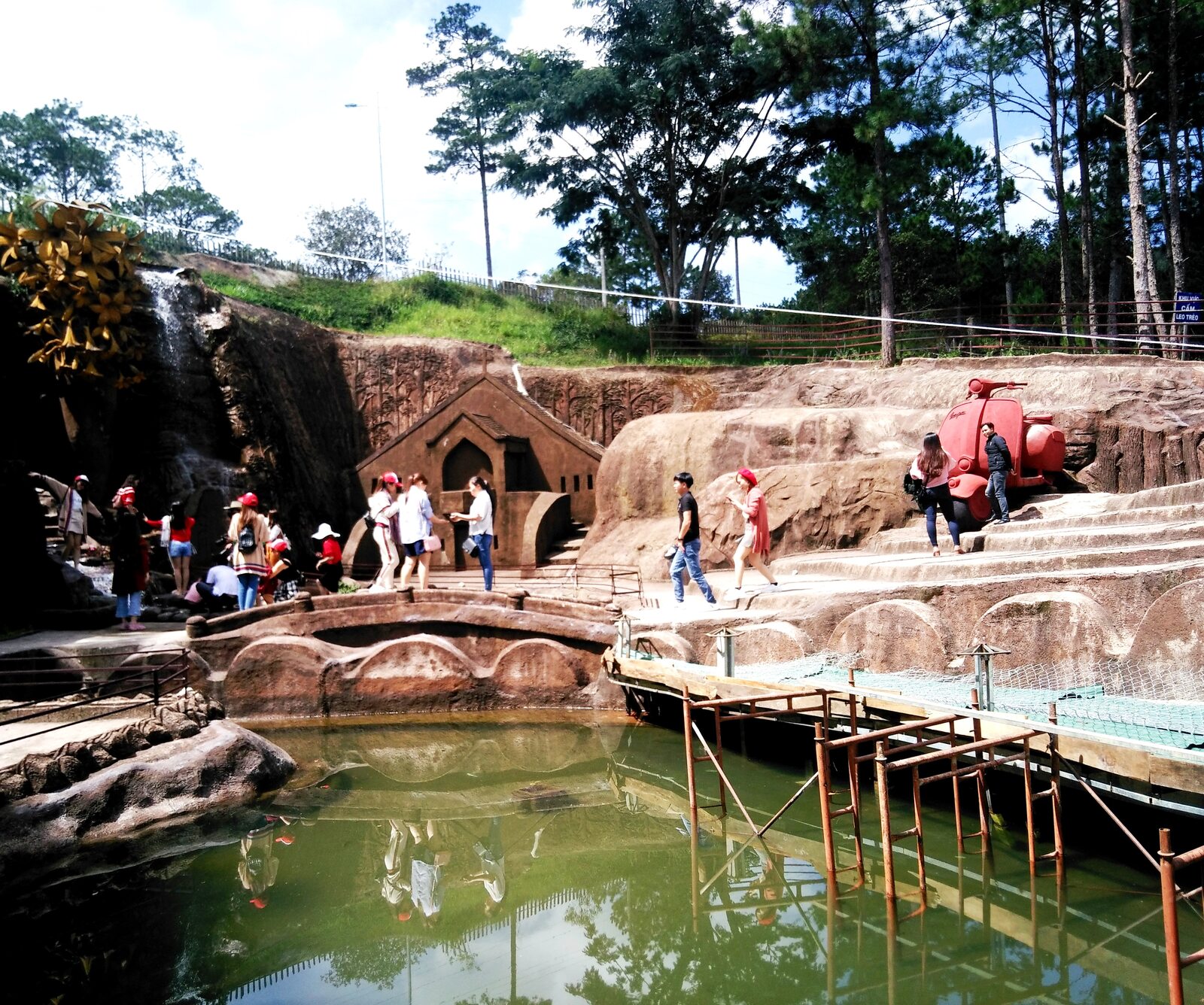
Da Lat's highland weather matters more here than at an indoor museum: the sculpture route is outdoors, so light, rain and mud decide how comfortable the visit feels.
Dry season
Roughly November–April
Rainy season
Roughly May–October
Quietest window
Weekday mornings
Busiest
Weekends, holidays, Tet
Season by season
Da Lat sits on a highland plateau and does not have a tropical lowland pattern. The drier stretch generally runs from late November into April, with cooler mornings and clearer light; May to October brings more frequent rain, often as afternoon showers rather than all-day drizzle.
These are regional tendencies, not a forecast. Check the local forecast for your dates on the site's weather section, which loads a regional model rather than claiming on-site observation.
December–March: cool, dry, good visibility, cold mornings — bring a layer.
April–May: warm and transitional, build-up showers possible.
June–September: greenest scenery, highest chance of a wet afternoon.
October–November: mixed, with occasional heavy rain and fresh evenings.
Historic image used for context, not a current-condition photograph. Photo credits.
Time of day
Morning is generally the better photographic window: softer side light, fewer people in the frame and a lower chance of the afternoon build-up. Arriving near opening also gives you a buffer if the gate closes earlier than the directory suggests.
Midday flattens the clay surfaces and puts hard shadows across faces and reliefs. Late afternoon light is attractive but leaves little margin before the 17:00 closing shown in the Maps snapshot.
Crowds
Domestic tourism peaks at weekends, school holidays and around Tet, when Da Lat fills and groups arrive by coach. A weekday morning in the dry season is the least crowded combination.
Photographers who want empty frames should be at the gate before the first coach, and should still expect other visitors at the most obvious viewpoints.
What rain changes
The clay figures are outdoors. Rain darkens the surfaces, makes paths and steps slippery and can soften exposed clay edges, which is one reason barriers and no-touch rules matter.
A wet day is not wasted, but plan a shorter loop, wear shoes with grip, protect your camera and keep to surfaced paths. See the rainy-day guide for the full checklist.
Matching the visit to your trip
If this is your only Da Lat outing, choose a dry-weather morning and pair the site with the Tuyen Lam Lake area rather than rushing back to the city centre.
If your dates are fixed in the rainy season, keep the visit flexible within the day: go when the radar is clear rather than committing to a fixed hour.
Season-by-season trade-offs
Da Lat's highland climate is the reason the site is pleasant at all, but it also produces two very different visiting experiences. In the drier months the ground is firmer, the light is more predictable and an outdoor sculpture walk is straightforward. In the wetter months the same walk can be atmospheric — low cloud, wet clay colour, reflections in the water features — at the cost of slippery surfaces and interrupted plans.
No specific rainfall figure or monthly total is quoted here. Regional forecasts and the on-site weather panel on the home page are better sources than a static annual average, and conditions can change between morning and afternoon.
Drier months: easier walking, clearer long views, more predictable photos.
Wetter months: stronger colour and fewer crowds, higher chance of rain.
Festival and holiday periods: check for crowd and schedule changes.
Cool evenings: bring a layer even after a warm afternoon.
Matching the day to what you actually want
Photographers usually want an early start, when the low sun gives the reliefs depth and the popular water feature is quieter. Families with young children often do better after a proper breakfast and a short nap, even if that means brighter light. Travellers who dislike crowds should avoid weekend middays and public holidays rather than trying to optimise the month.
If your trip is short, choose the day with the best forecast rather than the theoretically best season. One clear morning in the wet season is a better sculpture visit than a rainy afternoon in the dry one.
Climate notes checked 10 November 2026. Prices, hours and access are attributed references, not live operator information.Provincial directory ↗
This is an independent guide, not the operator or a ticket seller. Confirm current prices, opening, access and photography rules before travelling.
Practical answers
Frequently asked questions
What is the best month to visit Clay Tunnel Da Lat?
The drier stretch from late November to April usually gives the most reliable conditions. December to March is cool and clearer, but mornings can be cold.
Is it worth visiting in the rainy season?
Yes, with adjustments: shorter loop, grippy shoes, rain cover for your camera, and timing around showers rather than a fixed itinerary.
What time of day is best for photos?
Morning, close to opening, gives softer light and fewer people. Midday creates hard shadows on the clay reliefs.
When is it most crowded?
Weekends, Vietnamese school holidays and the Tet period. Weekday mornings outside those windows are usually calmer.