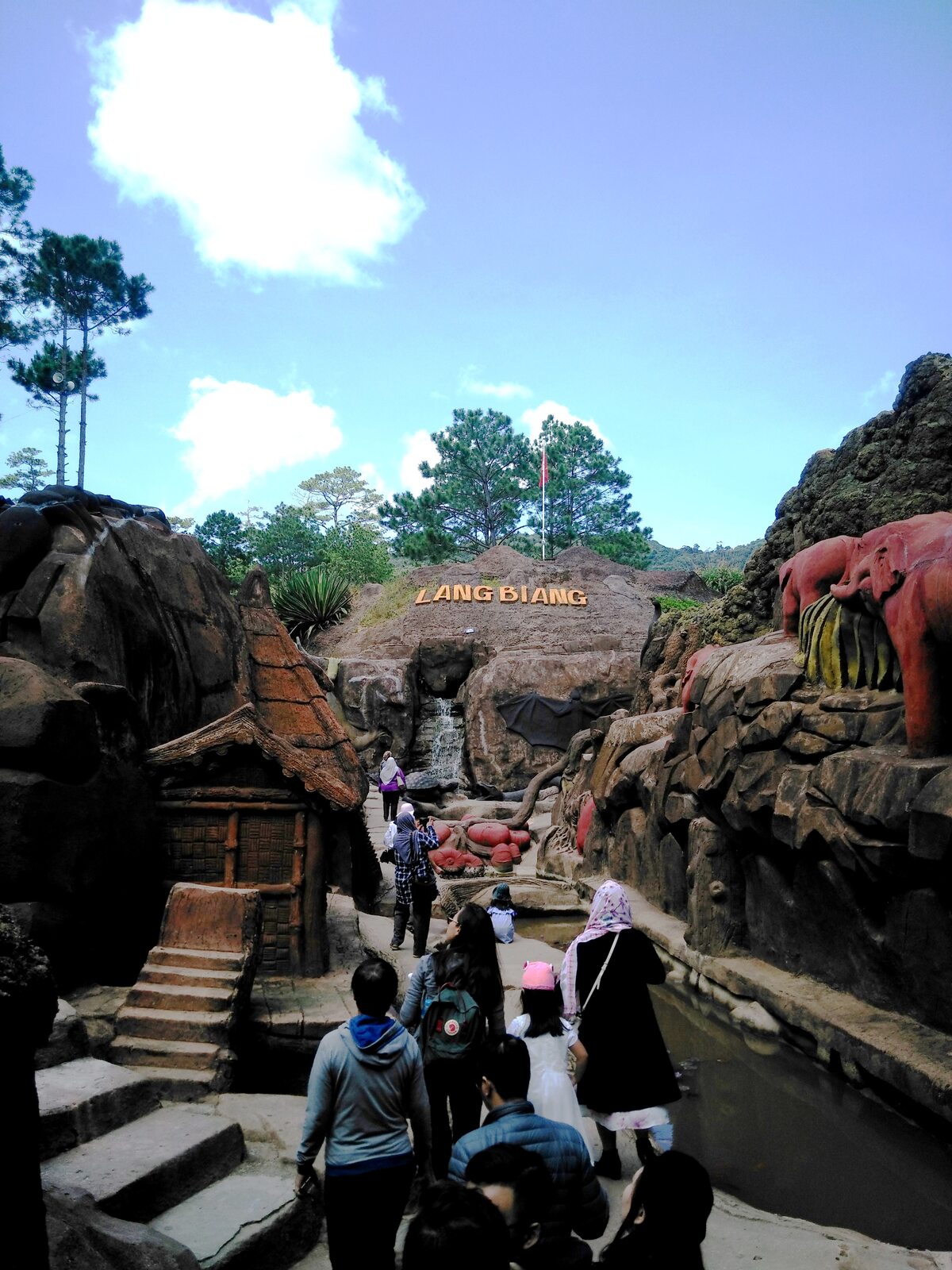
One verified fact and one honest limit: Maps marks an accessible entrance, but no independent audit of the full route exists.
Entrance
Marked accessible on Maps
Full route audit
None available
Gradients / steps
Not published
On-site assistance
Not confirmed
What the accessible entrance marker means
The Maps listing for the attraction, in the 30 October 2026 snapshot, marked an accessible entrance. That is a listing attribute describing an entrance, not a statement that the whole visitor route is step-free.
A sculpture landscape built on sloping ground will usually include steps, compacted paths and narrow gaps between figures. None of these has been measured here, so they cannot be described as wheelchair-friendly or otherwise.
Historic image used for context, not a current-condition photograph. Photo credits.
Questions to ask before you rely on access
Call or ask your hotel to call, and be specific. General questions get general answers.
Is there a step-free entrance, and where is it?
How long is the main route, and how many steps are on it?
Are there accessible toilets, and are they open?
Can staff assist a wheelchair user or a visitor with limited walking range?
Is a shorter route available that avoids slopes?
Realistic planning
If walking distance or balance is a concern, plan a short visit rather than a complete loop, and bring a companion. Consider a wheelchair with larger wheels only if you have confirmed the surfaces.
The highland climate adds a factor: sun exposure on open ground and cool, damp mornings. Allow more time than the distance suggests.
If access is not workable
Ask whether a companion can walk the route with a phone call or video, or choose a viewpoint near the entrance. Do not enter service areas or off-path ground to compensate.
Alternative Da Lat stops with easier surfaces exist, but each has its own access conditions; check them individually rather than assuming.
A phased way to assess the route
Rather than asking 'is it accessible?', break the visit into stages: arriving from the vehicle, reaching the ticket point, the first stretch of sculpture path, the water-feature area, and the return. A site can work well for stage one and fail at stage three. This is also the most useful form of words when you contact the operator or ask staff on arrival.
The provincial directory describes architectural and landscape reproductions but does not publish a surveyed accessible route, and the 30 October 2026 Maps snapshot only marks an accessible entrance. Nothing here asserts step-free access, ramp gradients, handrails, accessible toilets or seating along the way.
Ask about steps at each stage, not just the entrance.
Ask whether a companion can stay with you throughout the route.
Check surface material after rain; it changes the effort required.
Confirm where a vehicle can stop if you need to leave early.
If the full route is not workable
A partial visit is still a real visit. Seeing the first sculpture group and the water-feature area, then taking a rest, may be a better outcome than attempting the whole loop. Agree in advance that the group can split, and set a clear meeting time and place.
If even the entrance area proves difficult, the lake area viewpoints and the city's flatter central sights are reasonable alternatives for the same day. Treat this as a change of plan, not a wasted trip, and use the nearby guides to choose a stop with a vehicle-accessible viewpoint.
Questions worth sending before you travel
A vague message such as 'is it accessible?' tends to produce a yes that tells you nothing. Ask four specific questions: is there a step-free route from where vehicles stop to the ticket point; are there steps within the sculpture path; is there a handrail or seating along that path; and where is the accessible toilet. Ask whether a companion may remain with you throughout.
A useful answer names particular places rather than giving a general assurance. If the reply is uncertain, treat the first section as the confirmed part of the visit and keep the rest optional. That way a partial route is a planned outcome rather than a disappointment.
Ask about each stage of the visit separately.
Request specific details: steps, surface, handrails, seating, toilets.
Keep the reply with a date so it can be re-checked.
Access notes checked 30 October 2026. Prices, hours and access are attributed references, not live operator information.Provincial directory ↗
This is an independent guide, not the operator or a ticket seller. Confirm current prices, opening, access and photography rules before travelling.
Practical answers
Frequently asked questions
Is Clay Tunnel Da Lat wheelchair accessible?
Not established. Maps marks an accessible entrance, but the full route, gradients, surfaces and toilets have not been audited.
Are there steps on the route?
Likely, given the sloping sculpture landscape, but no count or gradient is published. Ask before buying a ticket.
Can staff help visitors with limited mobility?
Not confirmed. Ask directly when you call, and bring a companion if assistance is essential.
How long is the walking route?
No verified length is published. Plan for a short loop rather than a fixed distance.