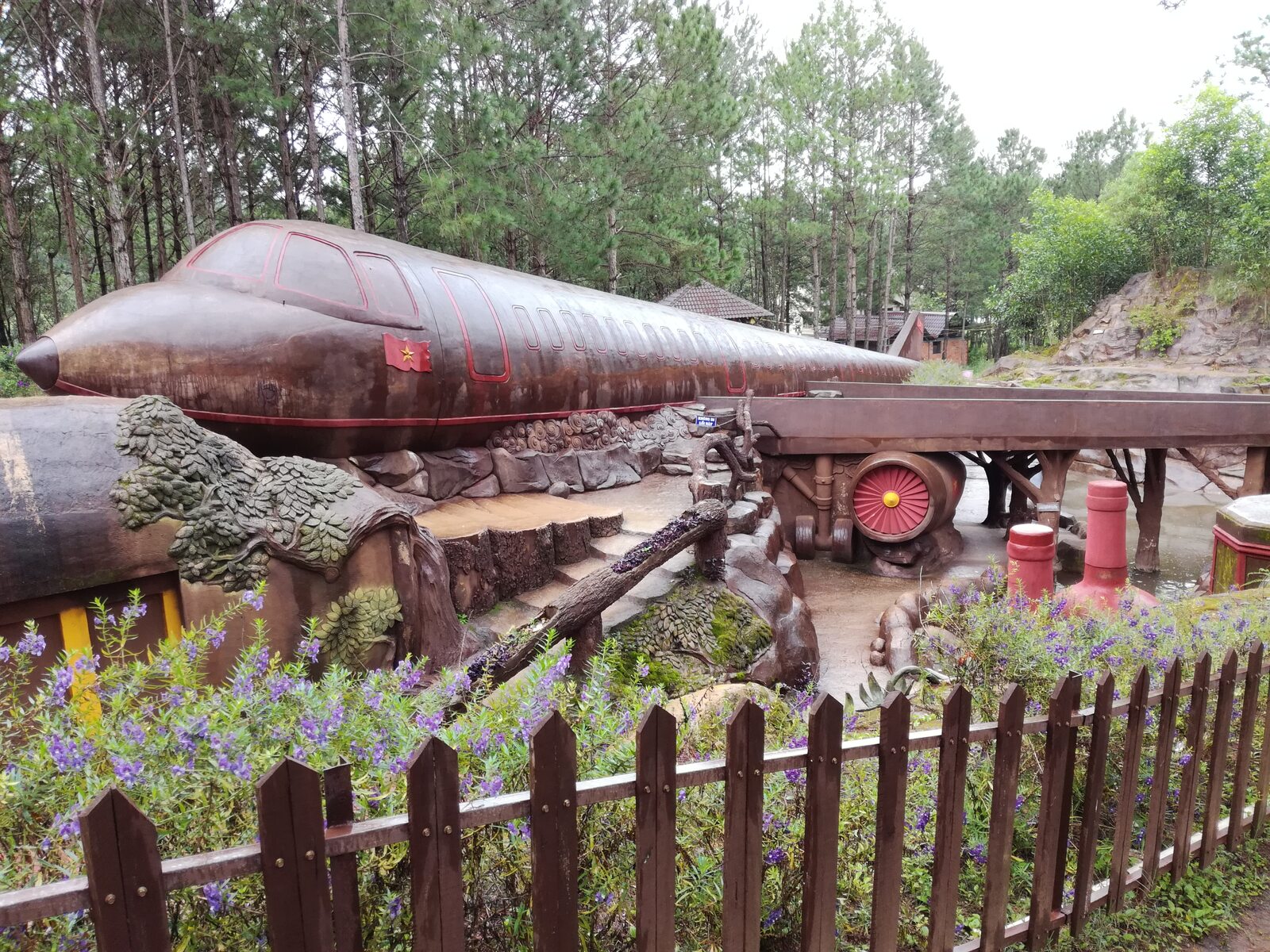
One of the route's pleasures is recognising real Da Lat buildings at reduced scale, then meeting the originals later in your trip.
Theme
Da Lat landmarks in clay
Real counterparts
Station, churches, city landmarks
Scale
Compressed, artistic
Best for
Visitors who know Da Lat
What a miniature city does
Reducing a city to tableaux makes relationships visible: hills, lake, church spires and station roof lines read as one composition instead of separate stops.
The models are interpretations. Roof pitches, colours and proportions are adjusted for the setting, so do not use them as architectural references.
Historic image used for context, not a current-condition photograph. Photo credits.
Landmarks you can still visit
Da Lat Railway Station, the city's churches and the market area all exist as working places in town. Seeing a clay version first is a useful orientation, not a substitute for the building.
Da Lat Railway Station: the 1930s station and its short cog line to Trai Mat.
Da Lat Cathedral: the cathedral known for its spire and hilltop position.
Lam Vien Square: the city-centre plaza with its artichoke-bud forms.
Da Lat Market: the practical morning and night market hub.
Reading the scenes with children
A miniature city is a good way to keep children engaged: ask them to find the church spire, the station roof or the lake in the scene.
Keep the game on the path. Pointing is fine; climbing on the models is not.
Photographing scale models
Shoot from a low angle close to the model to make it read as a building rather than a toy, and avoid including the barrier in the frame.
A slightly longer lens compresses the scene and hides the surrounding park, which makes the miniature look more convincing.
What is not documented
Which specific buildings are represented, and whether the selection changes, is not published. Build your expectations around the theme, not a checklist.
A self-guided comparison walk
Turn the visit into a comparison rather than a checklist. For each architectural subject you recognise — a station, a church façade, a roofline associated with the city — ask what the model keeps, what it simplifies and what it leaves out. Scale, roof pitch and window rhythm are usually the features that make a miniature readable from a distance.
If you plan to see the real buildings afterwards, note the model's angle before you leave. Photographing the real subject from a similar viewpoint makes the comparison obvious and gives a two-part story to the day rather than two unrelated sets of pictures.
Pick two or three subjects, not every model in the park.
Note one detail you expect to verify in the city.
Compare silhouettes before comparing decoration.
Use the real-building guides for the second half of the day.
What a model cannot tell you
A reproduction is an interpretation. It cannot establish a construction date, an architect, a restoration history or the original use of a building, and this guide does not claim those facts. Where a caption or sign gives a date, treat it as the site's statement and photograph it if you want to keep the reference.
That distinction matters because Da Lat's architecture is easy to romanticise. Enjoy the recognition and the craft, but verify historical claims against the provincial directory or a proper architectural source before repeating them.
Descriptions checked 10 November 2026. Prices, hours and access are attributed references, not live operator information.Provincial directory ↗
This is an independent guide, not the operator or a ticket seller. Confirm current prices, opening, access and photography rules before travelling.
Practical answers
Frequently asked questions
Which buildings are recreated in clay?
The provincial directory describes Da Lat and Vietnamese architectural and landscape reproductions without listing each building. Expect recognisable city landmarks.
Are the miniatures accurate models?
No. They are artistic interpretations with adjusted scale and detail, not measured replicas.
Can I visit the real buildings afterwards?
Yes. The railway station, cathedral, market and Lam Vien Square are separate city attractions with their own hours and access.
Is this section good for children?
It is the easiest part of the route for children to enjoy, as long as they stay off the models.