If you only have an hour, the order matters more than the checklist. Start at the far end and work back toward the entrance.
Priority 1
Water feature with sculpted faces
Priority 2
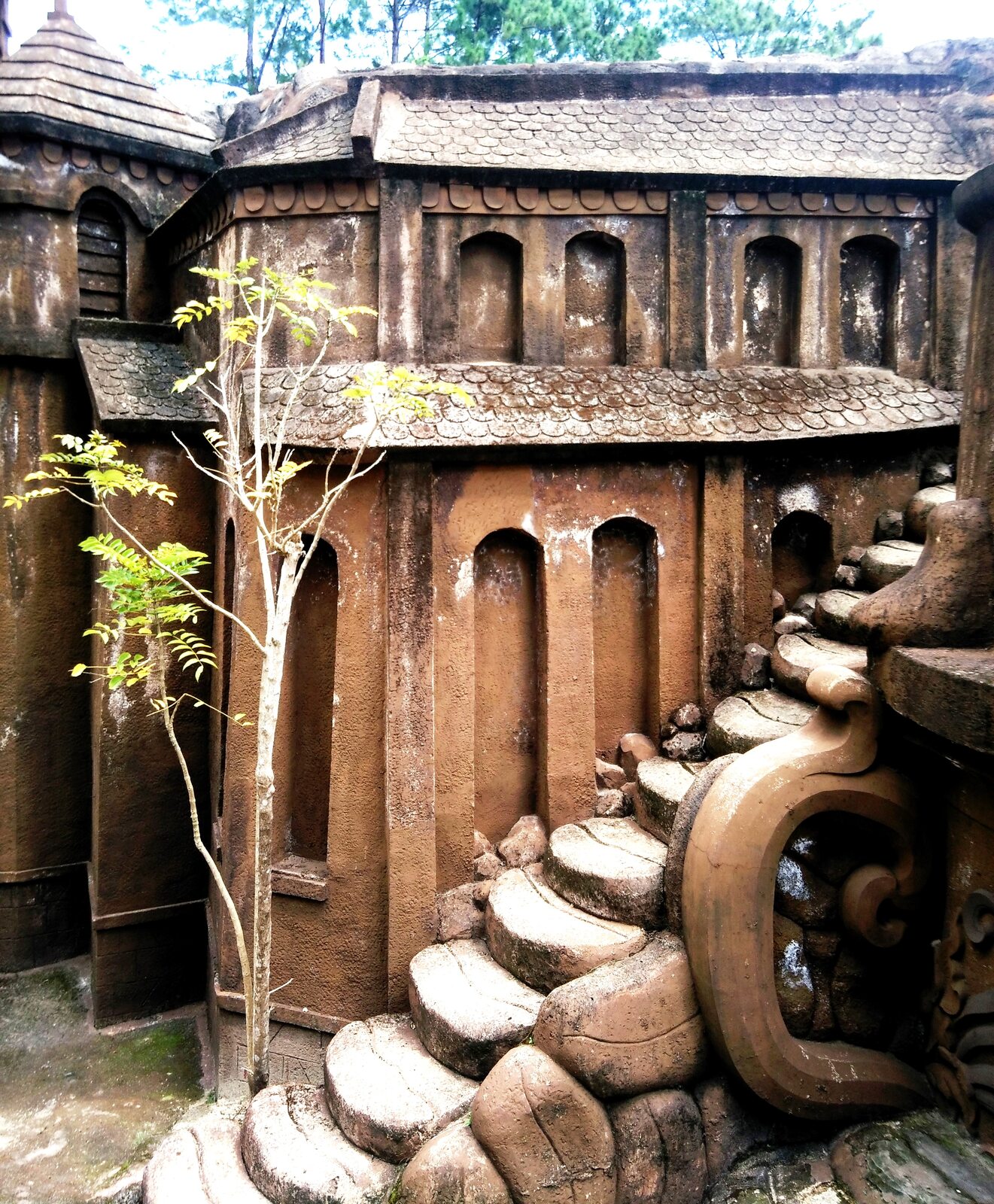
Clay architectural scenes
Priority 3
Relief and figurative details
Skip first if late
Repeat viewpoints
The five things worth your time
The site rewards looking closely rather than collecting viewpoints. These are the subjects that justify the walk.
The water feature: reflections, sculpted faces and the site's signature image.
Clay architectural scenes: recognisable Da Lat and Vietnamese landmarks at reduced scale.
Landscape construction: how hills, planting and water are built into the route.
Figurative reliefs: faces, animals and human groups worked into walls and panels.
The long path itself: the composition of the route as a whole, best seen from either end.
Historic image used for context, not a current-condition photograph. Photo credits.
The order that works
Walk to the furthest point you intend to reach, then photograph on the way back. Groups cluster near the entrance, so the rear of the route is quietest when you arrive.
Do the water feature early if it is your priority. It is the one subject where a queue changes the experience.
If you have 45 minutes
Water feature, one architectural scene, and the path view. Skip duplicate subjects and do not wait for a perfectly empty frame.
If it is raining
Keep to firm surfaces and the closest scenes, then leave. Wet steps and soft clay are not worth a complete loop, and overcast light will still give you a usable photograph at the water.
What is missing from most lists
Most articles list subjects without saying what is verified. The number of sculptures, the identity of every building and any 'largest in Vietnam' claim are not documented in the sources used here.
A priority order for a short visit
If you have one uninterrupted hour, prioritise the main sculpture group, the water-feature viewpoint and one architectural miniature that you can compare with a real building later. Those three give you the material, the setting and the city connection. Everything else is a bonus rather than a requirement.
Walk the route in one direction and resist the urge to double back for a better angle until the end. Most of the site's character comes from the sequence — built forms giving way to landscape — and constant backtracking breaks that sequence.
First: one sculpture group, read from a distance then up close.
Second: the water feature, with a short wait for a clear frame.
Third: an architectural model worth comparing in town.
Last: any detail you want to revisit on the way out.
What to leave out when time is short
Skip exhaustive coverage of every relief, any stop that requires a long queue in full sun, and a detour that separates you from your transport plan. A short visit that ends calmly is better than a long one that ends with a missed ride.
This guide intentionally does not publish a numbered list of installations or a measured route order. Signage and the layout on the day are the reliable sources; a confident list written from a desk would age badly and send visitors looking for something that may have moved.
Route order checked 10 November 2026. Prices, hours and access are attributed references, not live operator information.Provincial directory ↗
This is an independent guide, not the operator or a ticket seller. Confirm current prices, opening, access and photography rules before travelling.
Practical answers
Frequently asked questions
What is the main thing to see?
The water feature with sculpted faces, followed by the clay architectural scenes and the route's landscape construction.
How should I walk the route?
Go to the far end first and work back toward the entrance, photographing on the return leg.
What can I skip if I am short of time?
Repeated viewpoints and secondary figures. Prioritise the water feature and one architectural scene.
Is there a map of the route?
No route map is published. Ask at the entrance whether a site plan is displayed.