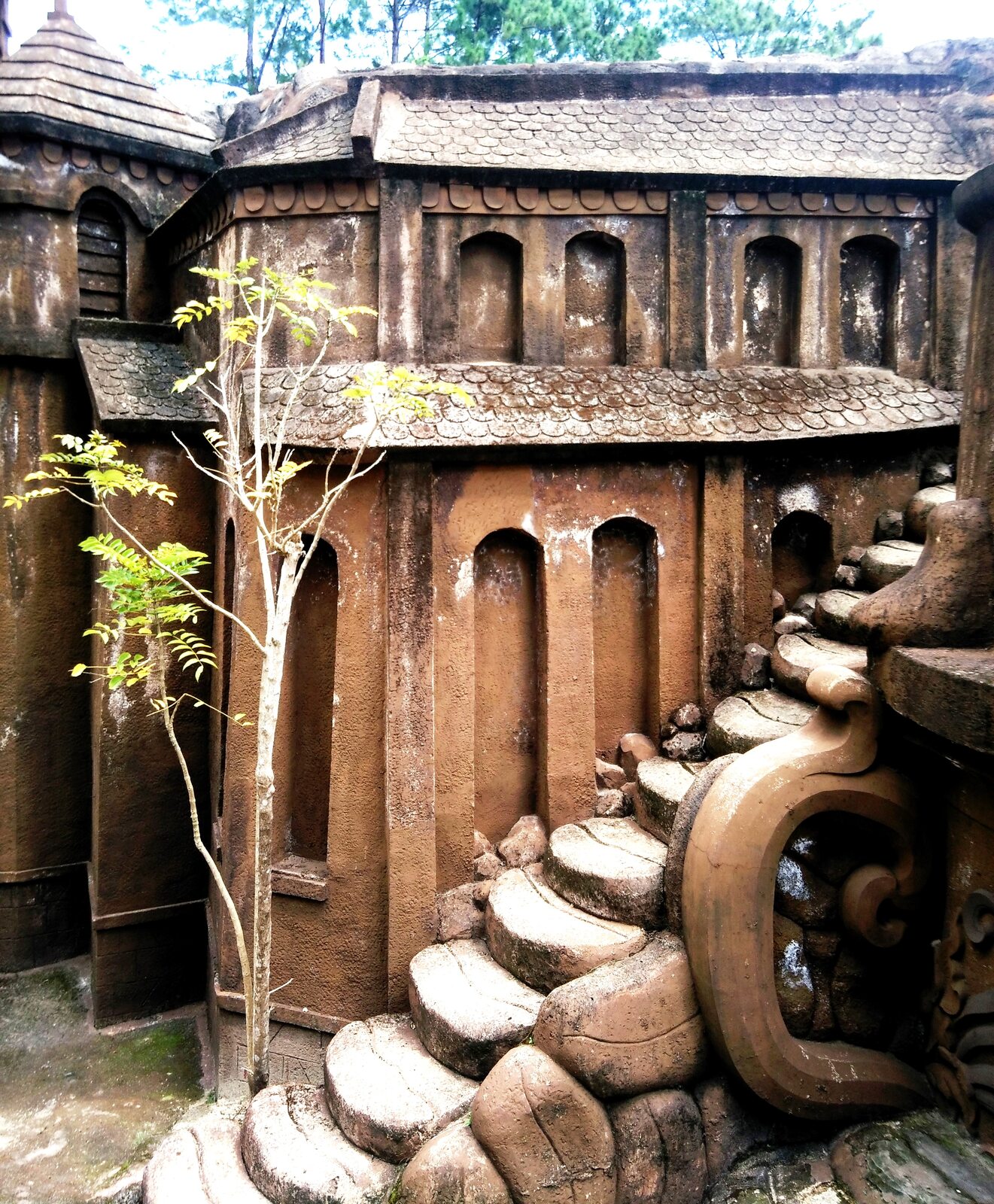
The attraction's identity is the material: unbaked clay shaped into architectural and landscape scenes rather than carved stone or cast bronze.
Material
Unbaked clay (per provincial directory)
Subjects
Da Lat and Vietnamese landmarks, landscapes
Route style
Outdoor sculpture path
Touch policy
Do not touch or climb
A material that changes the rules
Clay is soft before firing and remains vulnerable after drying. That is why the most important rule here is also the simplest: look, photograph, do not touch.
Rain darkens the surface and can soften exposed edges. Any figure behind a barrier or under cover is being protected, not hidden.
Historic image used for context, not a current-condition photograph. Photo credits.
Subjects and scale
The provincial tourism directory describes reproductions of Da Lat and Vietnamese architecture and landscapes. Expect scenes that condense landmarks into walkable tableaux rather than isolated statues on plinths.
Treat every scene as an artistic interpretation. A clay church or station is not a historic building, and proportions are deliberately compressed for effect.
Architectural scenes: buildings and streetscapes recreated at reduced scale.
Landscape scenes: hills, water and planting built into the route.
Figurative work: faces, animals and human groups worked in relief.
How to read the route
Walk one direction and photograph on the return leg. That halves the crowd problem and lets you see which scenes deserve more time.
Groups tend to stop at the first large subject, so the middle of the route is often quieter than the entrance.
Care and etiquette
Stay on the path, keep children off plinths, and do not sit or lean on figures for a photograph. Follow staff direction where a section is roped off.
No climbing, no sitting on sculptures.
No wet hands or drinks held over the clay.
Ask before photographing other visitors or staff.
Take litter out with you.
What is not verified
Detailed authorship, construction dates, the number of figures and any restoration programme are not documented in the sources used here. Descriptions that present exact counts or artist names should be treated cautiously.
How to read a relief as you walk
Look at three things in order: the silhouette from a distance, the surface detail up close, and the way the piece meets the ground. The first tells you what the subject is meant to be; the second shows how the material was worked; the third explains why some installations feel planted in the hillside while others read as objects placed on it. Walking past at a constant speed flattens all of that.
Weathering is part of the display, not damage to be ignored. An outdoor clay or earth-toned surface changes with rain, shade and touch, so the same relief can look crisp in one month and soft in the next. Treat what you see as a dated observation rather than a permanent description of the artwork.
Start far enough back to read the whole shape.
Step closer for tool marks, joins and surface texture.
Notice where shadow does the work of outlining a form.
Do not touch or lean on a relief to steady a photograph.
Choosing what to photograph
A useful rule is one wide frame, one mid-distance frame and one detail for each sculpture group you care about. The wide frame establishes the setting, the middle one shows scale against a person, and the detail is the image you will actually want later. Photographing every piece from the same distance produces a gallery that all looks alike.
This guide does not name individual installations or claim a verified construction material, artist or sequence. Those details should come from signage on site or an operator source, and they are worth recording in your own captions if you can read them.
Directory description checked 30 October 2026. Prices, hours and access are attributed references, not live operator information.Provincial directory ↗
This is an independent guide, not the operator or a ticket seller. Confirm current prices, opening, access and photography rules before travelling.
Practical answers
Frequently asked questions
What are the sculptures made of?
The provincial tourism directory describes unbaked clay used for architectural and landscape reproductions.
Can I touch the sculptures?
No. Clay marks and softens easily, so keep hands off and follow barriers and staff instructions.
Are they copies of real Da Lat buildings?
They are artistic representations of landmarks and landscapes, not replicas built to architectural scale.
How many sculptures are there?
No verified count is published. Treat specific numbers in third-party articles with caution.