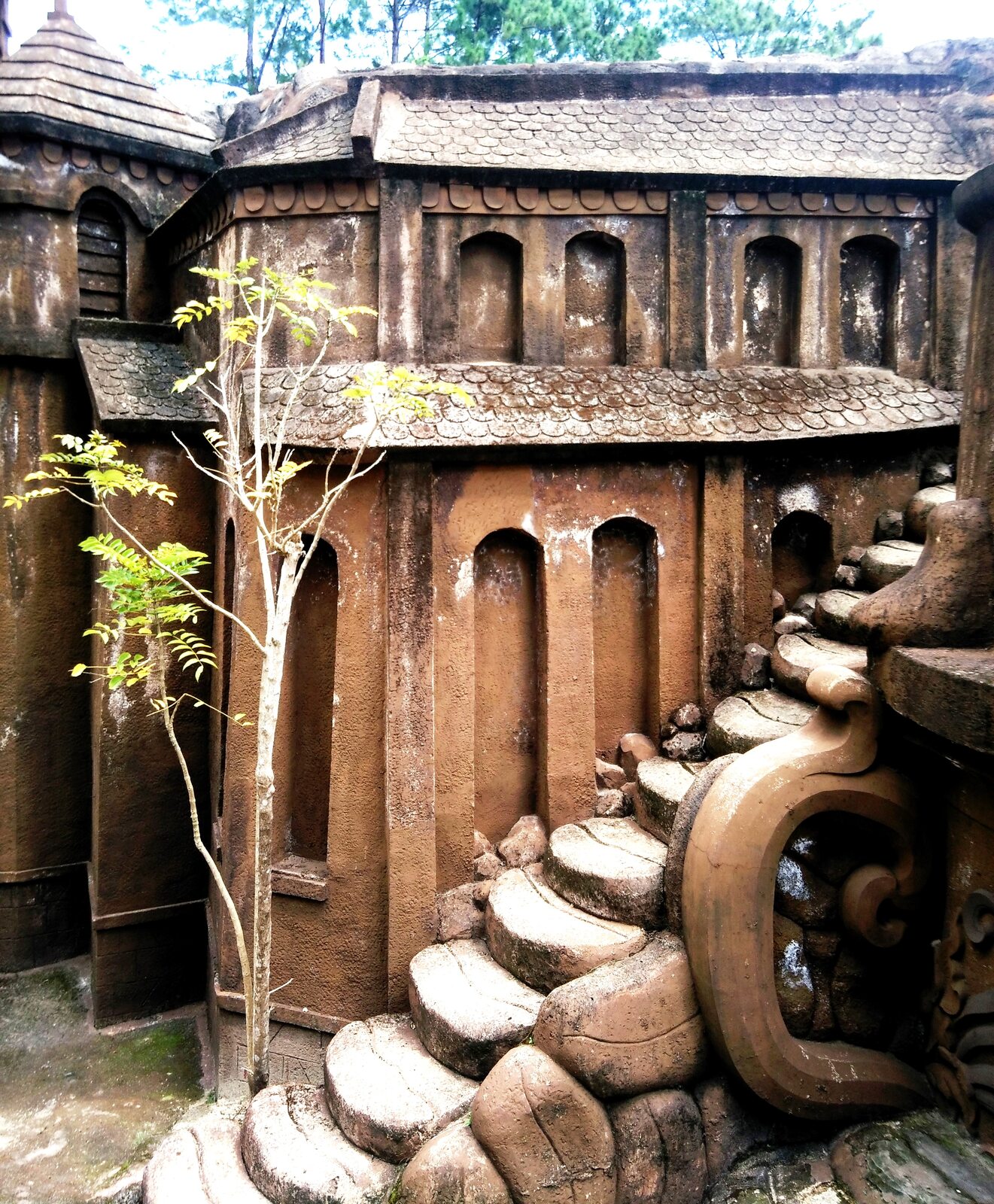
Ordered by light rather than by distance: clay at opening, water before the wind picks up, and city architecture when the sun drops.
Start
At opening, about 06:00–07:00
Key windows
Early side light, overcast midday, dusk
Gear
24–70mm, cloth, rain cover
Total time
A full day with breaks
First light at the sculptures
Arrive at opening. Side light rakes across the clay and the paths are empty; this is the only reliable window for a clean wide shot of the route.
Walk to the far end before shooting, then work back so you are never fighting the crowd at the entrance.
Historic image used for context, not a current-condition photograph. Photo credits.
Suggested itinerary timetable
Time
Stop
What to check
07:30–08:15
Arrive in the Tuyen Lam area
Check hourly cloud and rain before committing to a first location.
08:15–09:30
Sculpture path, wide frames
Low light gives reliefs depth; include a person early for scale.
09:30–10:15
Water-feature reflections
Wait for a clear frame; never step onto a wet edge.
10:15–11:00
Architectural miniatures
Photograph details you can compare with real city buildings later.
11:00–12:30
Rest and image review
Back up files and note which frames need a second attempt.
14:30–16:00
Lake or hill viewpoint
Choose based on cloud, not on a fixed 'best hour'.
16:00–17:30
City architecture
Station or cathedral exteriors; confirm any interior photography rules.
Times are light-based planning windows. No golden-hour guarantee, operator schedule or measured transfer time is implied; weather may reverse the order of the afternoon stops.
Water before the wind
Reflections need still water. Shoot the water feature before late morning, when breeze and visitors both increase.
Use a low angle, a level horizon and a small aperture if you have a tripod; ask staff first.
Midday: architecture and interiors
Move to the city when the light is hard. The railway station's glazing, the cathedral's shaded side and market interiors all work better under flat light.
This is also the right time to eat and to back up cards.
Dusk
Lam Vien Square's glass structures balance interior and sky light at dusk, and the market gives street-food frames after dark. Handheld night mode is enough; a tripod blocks walkways.
Seasonal adjustments
In the wet season, put the sculpture block first and keep the rest flexible; a cleared afternoon can be worth more than a fixed itinerary. Overcast light is not a problem for clay.
A light-driven order, not a map-driven one
Shallow relief loses its form under hard midday sun, so the sculpture frames come first. The water feature works in soft light too, and a calm surface is more valuable than a dramatic sky. The middle of the day is the least useful for texture, which is why it is given over to rest, backup and file management rather than another viewpoint.
The afternoon is deliberately undecided. If cloud builds over the hills, a city architectural subject is more reliable than a distant lake view; if the sky clears, the hill viewpoint earns its place. Decide after reviewing the morning images, not the night before.
Textured subjects early, distant views later.
One rest block for backup and review.
Keep two afternoon options, not five.
Backup frames for flat or wet light
Overcast and post-rain conditions are not a failed photo day. They are good for close detail, wet clay colour, reflections broken by droplets and portraits with soft shadows. Swap the wide establishing frames for a shot list of surfaces, joins and hands at work, and keep the phone lens dry between frames.
Heavy continuous rain is different. Shelter, protect the equipment and move the city interiors or a café into the schedule. No photograph is worth a slip on a wet edge.
Equipment, captions and etiquette
A phone with a clean lens, a cloth, a dry bag and a small power bank is enough for this itinerary. Larger setups raise a permissions question: photography rules and commercial shoots are not published for the attraction, so keep equipment small and ask before doing anything that occupies a viewpoint.
Caption images with the date and a neutral description. Avoid naming a specific sculpture unless signage confirms it, and avoid heavy saturation that changes the colour of the material. Accuracy is what makes a travel photograph useful a year later.
A two-shot list for each stop
At every location on this itinerary, take one honest establishing frame and one detail, then move on. The establishing frame shows where the subject sits; the detail shows why you stopped. This keeps the day moving, limits time spent at a crowded viewpoint and produces a set of images that can actually be edited into a coherent story.
Record the order of the frames in a short note. By the afternoon it is easy to forget which relief was photographed in which light, and a dated caption is more useful than a clever title when you come to publish the images.
One wide frame, one detail, then move.
Note the time and light for each stop.
Keep originals before any crop or edit.
When to abandon the afternoon plan
If heavy rain sets in, if the morning images need a second attempt, or if the group has been waiting more than a few minutes at each viewpoint, stop adding locations. Return for the better frame or take the sheltered city option. A day with six good photographs is more satisfying than one with sixty mediocre ones from nine stops.
Photography days fail through accumulation, not through a single bad decision. Every extra stop adds a transfer, a wait and a lighting compromise; deciding early which one to remove is the skill that keeps the day enjoyable.
Plan checked 10 November 2026. Prices, hours and access are attributed references, not live operator information.Provincial directory ↗
This is an independent guide, not the operator or a ticket seller. Confirm current prices, opening, access and photography rules before travelling.
Practical answers
Frequently asked questions
What is the best time for photography at the Clay Tunnel?
The first hour after opening, for empty paths and side light. Overcast midday also works for detail shots.
Do I need a tripod?
Not for most shots. Ask before using one; they are more useful at dusk in the city than on the sculpture route.
Can I shoot the whole plan in one day?
Yes, if you keep the sculpture and city blocks separate and do not add the waterfall or cable car.